Micellar Water and Cleansing Balm Do Different Jobs
Micellar water and cleansing balm suit different kinds of makeup removal; learn how their textures work so you can choose a comfortable, useful cleanse.
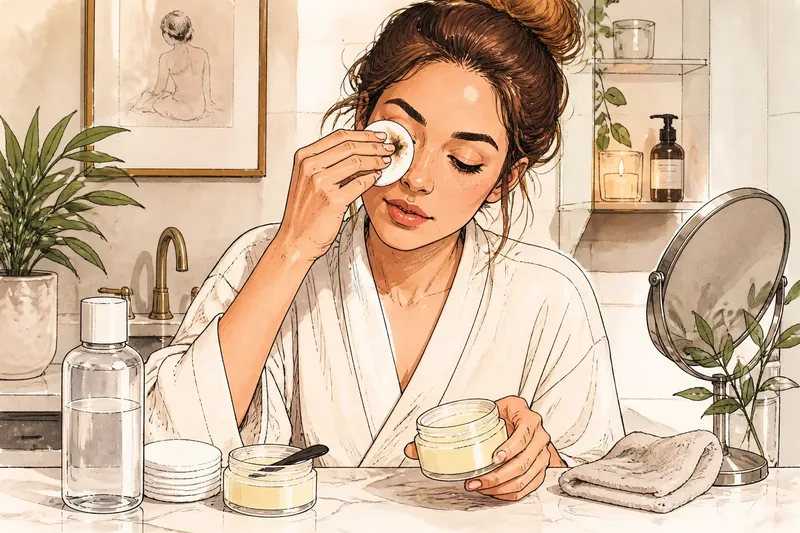
The most common mistake with micellar water and cleansing balm is treating them as rival versions of the same cleanser; the cost is often an awkward routine that feels either too fussy or not quite effective. Their textures make different tasks convenient. Micellar water is a light liquid used with a cotton pad, while cleansing balm is a soft, oil-rich solid that melts across the skin. Neither is a universal requirement, and you need not use both.
Imagine you wear sunscreen and a little mascara on a workday, then add long-wearing foundation and a bold lip for an evening event. You have a bottle of micellar water and a jar of balm. Rather than choose by habit or by claims on the front of the packaging, you can decide based on what is on your face, how you prefer to remove it and what your skin finds comfortable. The example is invented, but the choices are ordinary ones.
Two useful textures
Micellar water is a water-based cleanser containing cleansing agents that can gather oil and residue as you sweep a dampened cotton pad over the skin. It stays fluid, spreads easily across a pad and can be handy for targeted removal: a mascara smudge, lipstick at the edges or a quick first pass over a light layer of makeup. Some formulas are designed to be left on, while others are intended to be rinsed away, so the product directions matter.
A cleansing balm starts as a scoopable, waxy or buttery product. With warmth and massage, it softens into an oil-like layer that loosens makeup, sunscreen and skin oils. Add water if the label directs; many balms turn milky as they emulsify, then rinse away. This spreadable texture makes it convenient to work over a larger area without repeatedly reaching for fresh pads.
Both formats can remove makeup, but neither texture tells the whole story. Formulas differ, and waterproof mascara or tenacious lipstick may take more patience than everyday products. A balm can feel substantial without being automatically more thorough; micellar water can feel weightless without being automatically gentler. The useful question is which product lets you remove what you wore with less rubbing and less residue.
The weekday starting point
In the invented situation, the wearer gets home with sunscreen, a light complexion product and mascara. There is no reason to turn a modest layer into a complicated cleansing project. If they reach for micellar water, they can wet a pad generously, hold it against the eye briefly, then wipe gently in the direction that lifts the mascara. A second clean pad can pick up remaining face makeup without dragging the first pad back over already-cleansed skin.
If the wearer prefers a balm, a small amount can be warmed between clean fingertips and spread over dry skin, avoiding forceful rubbing around the eyes. They can massage until the makeup loosens, then emulsify and rinse as the product directions specify. This may feel more comfortable than several passes with pads, particularly when face makeup covers a broad area. It is a preference, not a rule that balm must be used at night.
For either choice, the aim is not a squeaky, tight finish. If the face feels uncomfortable afterwards, that is useful feedback about the routine or formula, not evidence that cleansing has been more effective. A separate gentle cleanser may suit someone who wants to wash after makeup removal, but adding one automatically is not necessary for everyone.
When the makeup changes
Now the hypothetical wearer has added long-wearing foundation and a bold lipstick for an evening event. A balm may be convenient here because its oil-rich texture can be massaged across the cheeks and around the mouth, helping loosen products over a broad area. The wearer can then emulsify and rinse, checking the hairline and sides of the nose for leftover colour. It is a single, coherent use of the balm rather than a claim that it will suit every formula or face.
Micellar water remains an option. The wearer might use it in careful passes, changing pads as they become marked and giving lip colour time to loosen before wiping. This can work well if they dislike the feel of balm or want precise control around the mouth. If they find themselves rubbing repeatedly, though, a different format or a dedicated remover for a stubborn product may be more comfortable.
For the mascara, neither product needs to be scrubbed into the lashes. A brief hold with a damp pad can help micellar water do its work; with balm, gentle fingertip contact can loosen residue before rinsing. If eye makeup is especially persistent, a remover formulated for that purpose may be a better fit. Keep product out of the eyes and stop if irritation occurs; seek professional advice for persistent symptoms.
What feels convenient?
Convenience is personal and practical. Micellar water is ready to pour and can be useful at a sink, on a cotton pad, or for a small correction. It can also mean keeping pads stocked and disposing of them after use. A reusable cloth is an option for some routines, but it needs laundering and should be used gently.
A balm needs clean fingers or a spatula and access to water if it is designed to rinse off. Its jar can suit a home routine, while its richer texture may feel too heavy to someone who dislikes oily products. Some balms leave a film that the user wants to remove with a second cleanse; others rinse clean to their satisfaction. The label and the wearer’s own comfort help settle that decision.
There is little value in chasing a complicated double cleanse simply because the products are sold as a pair. It is also not worth wiping the same area again and again to pursue a perfectly bare, stripped feeling. Cleanse enough to remove the day’s products, then notice whether skin feels comfortable and whether any visible makeup remains.
Choosing between the two?
Can micellar water remove sunscreen?
It can help remove sunscreen, especially when the layer is light and the formula suits the product. If residue remains or you need repeated rubbing, try a rinse-off cleanser or balm that feels more comfortable for you.
Does cleansing balm suit oily skin?
Oily skin does not automatically rule out a balm; formulas and personal preferences vary. Choose one that rinses comfortably for you, and stop using it if it causes persistent irritation or an unwelcome residue.
Do I need to use both?
No. One suitable remover may be enough for the products you wear and the way you like to cleanse. Combining formats is an option when it serves a clear purpose, not a required routine.
Should micellar water be rinsed off?
Follow the product’s directions: some micellar waters are intended to remain on the skin, while others call for rinsing. If leaving it on makes your skin feel uncomfortable, rinsing may be a simple adjustment.
Reading the result
Return to the invented wearer’s evening. They use balm across the long-wearing face makeup, rinse as directed and find the skin comfortable; for the next lighter day, they choose micellar water because it is quick and easy for their mascara and sunscreen. The observable result is not a perfect universal routine but a sensible match between the product worn, the removal method and how their skin feels afterwards. If either option leaves makeup behind, they can change the method rather than adding steps by default.
That is the practical distinction behind micellar water and cleansing balm: one offers a fluid, pad-led way to lift residue, while the other offers a massageable texture that can spread over a larger area. Consider the makeup, the amount of rubbing involved and the finish you are comfortable with. If you are choosing between them, let the job decide—not the idea that every face needs the same cleanser.