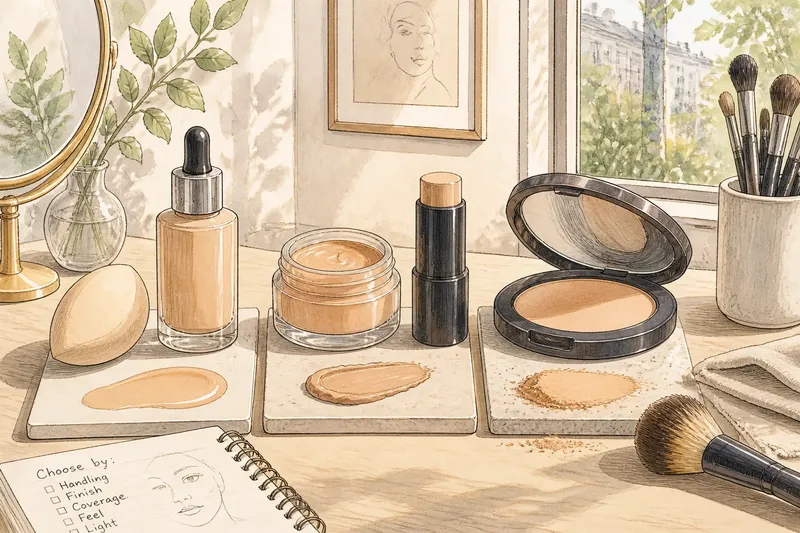
The Compact Case and Makeup on the Move
Compact case history reveals how mirrors, hinges and powder pans made makeup portable, while the object’s construction offers clues without proving its owner’s story.
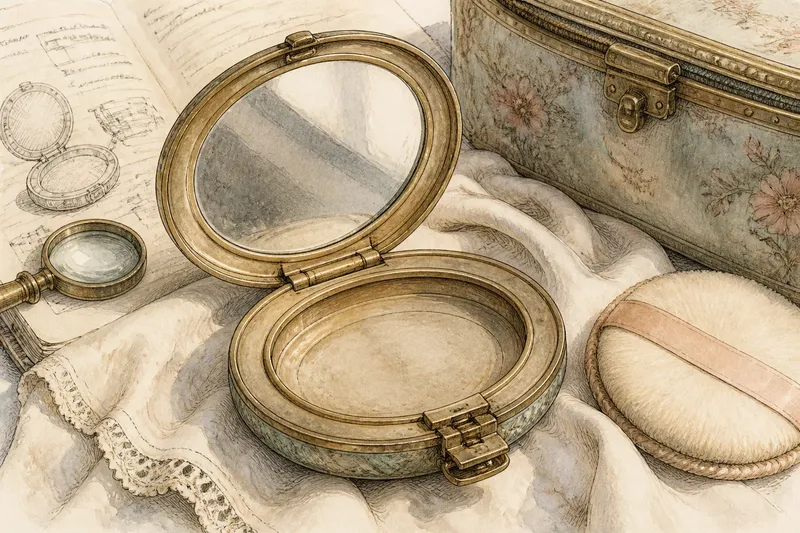
The most common mistake in reading a compact case is to treat it as a little powder box; the cost is missing how its parts made grooming portable and visible. Compact case history is easier to read through specific objects than through a sweeping story of progress: a mirror, hinged lid, powder pan and clasp can show how a case was built, but not by themselves when it was made or who carried it.
Those limits matter because compact cases changed across makers, materials and periods. Without a dated object, maker’s mark or reliable catalogue entry, it is safer to describe visible construction than to assign a precise date or claim that all cases served the same routine.
Parts of the case
A typical powder compact brings together a closable shell and an interior arranged for powder. Depending on the object, it may also have a mirror, a puff compartment, a cover over the powder pan or a place for a refill. These features vary: an empty recess could have held an insert, but inspection alone may not settle what belonged there.
The case is both container and working surface. A lid-mounted mirror can make a separate mirror unnecessary; a clasp helps keep the contents shut in a bag. A removable pan, where present, suggests that the powder and outer case were intended to be handled separately. That is a feature of construction, not proof of how often the case was used.
Materials and decoration
Metal, enamel and later plastics appear in compact cases, but material alone cannot establish a date. A polished or decorated exterior was exposed to touch and sight, so it could function as ornament as well as casing. Engraving, patterned surfaces and maker’s marks are observable details; the owner’s taste or the object’s original setting remains an interpretation unless other evidence supports it.
Decoration is not a reliable shortcut to provenance. A motif may suggest a design influence, but it cannot identify an owner, occasion or intended market on its own. For stronger identification, compare the case with dated catalogues, manufacturer records or carefully documented collections, and keep uncertain attributions qualified.
Reading compact design
When examining a case, use a consistent sequence. Each observation can narrow what is plausible without turning a clue into a certainty.
- Check the hinge: If it opens smoothly and holds the lid, describe it as functional; if it is loose or stiff, record that condition and avoid forcing it.
- Check the clasp: If it closes flush, note a secure-looking closure; if it will not catch, treat the case as unsuitable for carrying until a conservator or repair specialist advises you.
- Check the mirror: If it is fitted into the lid, note that the case includes an integrated reflective surface; if it is absent, do not assume it was originally missing rather than never supplied.
- Check the powder area: If a pan or refill is present, record its shape and fit; if the recess is empty, describe the gap without guessing which product belonged there.
- Check the applicator space: If a separate compartment or cover is visible, note how it divides the interior; if there is no such feature, do not infer that the case lacked a puff throughout its use.
- Check marks and decoration: If a maker’s name or mark is legible, transcribe it and seek a reliable comparison; if no mark is visible, describe the surface rather than assigning a maker.
- Check wear: If scratches cluster near the clasp, record their location as handling evidence; if wear is absent or unclear, do not use it to claim that the object was unused.
Say you are examining an unmarked oval case with a mirror, a hinged lid, an empty circular recess and a clasp that no longer catches. You first record those features and photograph the interior without moving anything; the result is a description, not a date. You then compare the shape and construction with a documented catalogue, but find no close match, so you leave the maker and period unresolved. Since the clasp fails, you decide not to carry it with loose contents; if the case is valuable or fragile, you ask a qualified conservator before attempting repair.
Compact case history?
What makes a compact portable?
A closable case can keep its contents together, while a fitted mirror and applicator space, where present, reduce the need to carry separate grooming tools. Its usefulness for travel depends on the actual construction and condition of that particular object.
Why were compact cases decorated?
The exterior was handled and visible, making decoration compatible with its protective purpose. Engraving or enamel can be described directly, but it does not establish why a particular maker or owner chose that design.
Were all compact cases made for handbags?
No single form proves a single intended setting. Size, closure and interior layout offer clues, but a case could have been kept at home, carried occasionally or used in another way.
What is not worth the effort?
It is not useful to build a full story from one scratch or decorative motif. Record what can be seen, compare it with documented objects where possible, and leave unsupported details open.
Care and interpretation
For an old compact, do not force a stiff hinge or polish away worn surfaces simply to make them shine. Fragile materials, loose mirrors and historic finishes may need specialist care; ask a qualified conservator before cleaning or repair. For a modern case, follow the maker’s care instructions.
Compact case history becomes more reliable when physical evidence and interpretation stay distinct. A mirror, clasp and fitted pan show what the object contains; a documented catalogue may help establish a maker or date. Neither alone tells the whole story of its use.
For someone searching for compact case history and makeup on the move, the useful point is that portability was built from practical parts, not size alone. Read the hinge, mirror, closure and interior as evidence of design, then resist turning those clues into a confident account of an unknown owner. That restraint is not a dead end: it leaves a more accurate record for the next person who examines the case.