Why Foundation Looks Different Across Formulas
Why foundation looks different across formulas comes down to texture, finish and application. Compare liquid, cream and powder to choose a base that suits your routine.
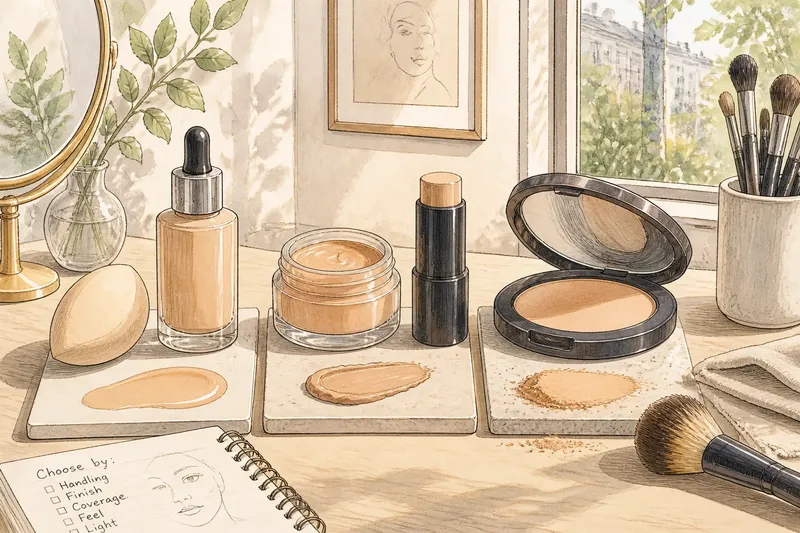
The most common foundation mistake is choosing a formula by shade alone; the wrong texture can leave the same colour looking slick, flat or conspicuously patchy. Why foundation looks different across formulas comes down to how liquid, cream and powder spread, settle and reflect light—not to a rule that one format suits everyone.
Liquid foundation
Liquid foundation has a fluid texture that can be applied with fingers, a damp sponge or a brush. Fingers offer direct control; a brush can spread the product broadly but may leave strokes if you stop before blending. A damp sponge presses and softens the layer, though it can pick up some product.
“Liquid” describes the format, not the finish. A particular formula may look dewy, satin-like or matte. A light layer lets more skin show through; adding a little to selected areas can build coverage without coating the whole face. A thick application, however, may gather around the nose or cling to dry patches.
Pause after blending before judging the result. A fresh sheen may soften as the product settles, while a powdery appearance may be visible straight away. If you want to cover a broader area or blend towards the jaw, liquid can be straightforward to spread.
Cream foundation
Cream foundation has more body than a fluid formula and may come in a jar, stick or compact. Packaging alone does not predict the finish: one cream may spread into a supple layer, while another feels dense and provides more coverage. Check the product description for its stated finish and coverage.
A cream’s thicker texture can make it easier to place precisely. Warm a small amount between clean fingertips or use a brush to blend the edges. Work in light layers; applying a large amount at once can look heavy around expression lines or dry areas.
A more substantial feel is not automatically a drawback. Cream may suit someone who likes a cushioned layer and has time to blend carefully. If you prefer a lighter feel or a quick application over a broad area, liquid may be a more comfortable starting point.
Powder foundation
Powder foundation is applied dry with a brush or sponge and leaves a powdery surface. A soft brush can lay down a light veil; a sponge tends to press product on more firmly. Repeated, forceful passes can make the texture more noticeable, so use a light touch.
Powder can suit someone who dislikes the feel of a creamy layer or prefers a less reflective finish. It may also catch on flakes, emphasise rough patches or settle into lines. If that happens, try applying less and concentrating coverage where you want it instead of building an even layer everywhere.
Powder foundation is intended to provide coverage; it is not simply finishing powder in different packaging. Coverage varies by formula, and the same pan can look different when applied with a compact sponge or a loose, soft brush.
Finish and texture
Finish describes the appearance on the skin; texture describes how the product feels and looks up close. A satin finish has some sheen without looking highly reflective. Dewy finishes reflect more light, while matte finishes appear less reflective. These labels are useful clues, not precise promises of how a formula will look on your face.
Consider the light and setting where you will wear foundation. Bright daylight can make a heavy layer or dry patches easier to notice than they are in a softly lit room. For a close-up occasion, a lighter application may leave more natural skin detail visible. For a long day, comfort and how the formula sits on your skin may matter more than the finish label.
Format choices?
Is liquid foundation always lighter?
No. Liquid can be sheer or highly covering, and its finish can range from dewy to matte. Judge the specific formula and the amount you apply, not the format alone.
Does cream foundation suit dry skin?
Some people prefer cream’s richer feel, but cream can still catch on dry patches or look heavy. The formula, skin surface and amount applied all affect the result.
Can powder foundation look natural?
It can, particularly when applied sparingly with a soft brush. Too much product or repeated pressure may make its dry texture more visible.
Can I combine different formats?
Yes, if you like the result and the layers blend comfortably together. A light liquid base with a little cream in selected areas, for instance, can vary coverage without one dense layer everywhere.
Match format to use
Choose a format by considering its handling as well as its appearance. Liquid spreads readily and allows coverage to be built in places; cream has more body and can be placed precisely; powder is applied dry and may leave a less reflective surface. None of these traits determines whether a foundation is the right colour or comfortable for you.
- Check how widely you want to apply it: if you want a fluid layer across broader areas, try liquid; if you want to cover selected spots, consider cream or a small amount of liquid.
- Check the feel you prefer: if you dislike a creamy layer, try powder or a light liquid; if you enjoy a more substantial feel, consider cream.
- Check your preferred surface: if you want less visible shine, compare formulas labelled matte or try powder; if you prefer sheen, look at satin or dewy options.
- Check for dry patches: if product catches on flakes, use less and avoid repeated passes; if it still looks patchy, try a different format or formula.
- Check for visible strokes: if a brush leaves lines, blend with a damp sponge or clean fingertips; if the layer remains uneven, use less product or change tools.
- Check the result in your usual light: if the finish looks convincing in daylight and indoor light, keep that application; if it looks too reflective or heavy, reduce the amount or try another finish.
Say you want a workday base and dislike a thick feel. Imagine you have a sheer liquid, a cream stick and a damp sponge, and you find the liquid comfortable on your cheeks but want more coverage over a small mark. Apply a light layer of liquid with clean fingertips, press the sponge over the edges, then tap a little cream onto the mark and blend its border. The expected result is a lighter-looking layer over most of the face with more coverage at that spot; if the cream looks too heavy, remove some with the sponge or leave the liquid alone. This invented situation illustrates a possible trade-off, not a promise that the combination will suit everyone.
What is not worth the effort is trying to make every formula behave identically by collecting more tools. Start with an applicator that feels manageable and use a small amount. If the result looks streaky, cakey or patchy, adjust the application or try another format rather than automatically adding another layer.
Choose by the result
Why foundation looks different across formulas is easiest to understand by comparing how each one handles on your skin: liquid flows, cream has more body and powder goes on dry. Treat those distinctions as a starting point, not a rule about skin type. Check the stated finish and coverage, then try a modest amount with the tool you expect to use. A comfortable formula that looks right in the light you spend time in is a better choice than one selected by texture name alone.